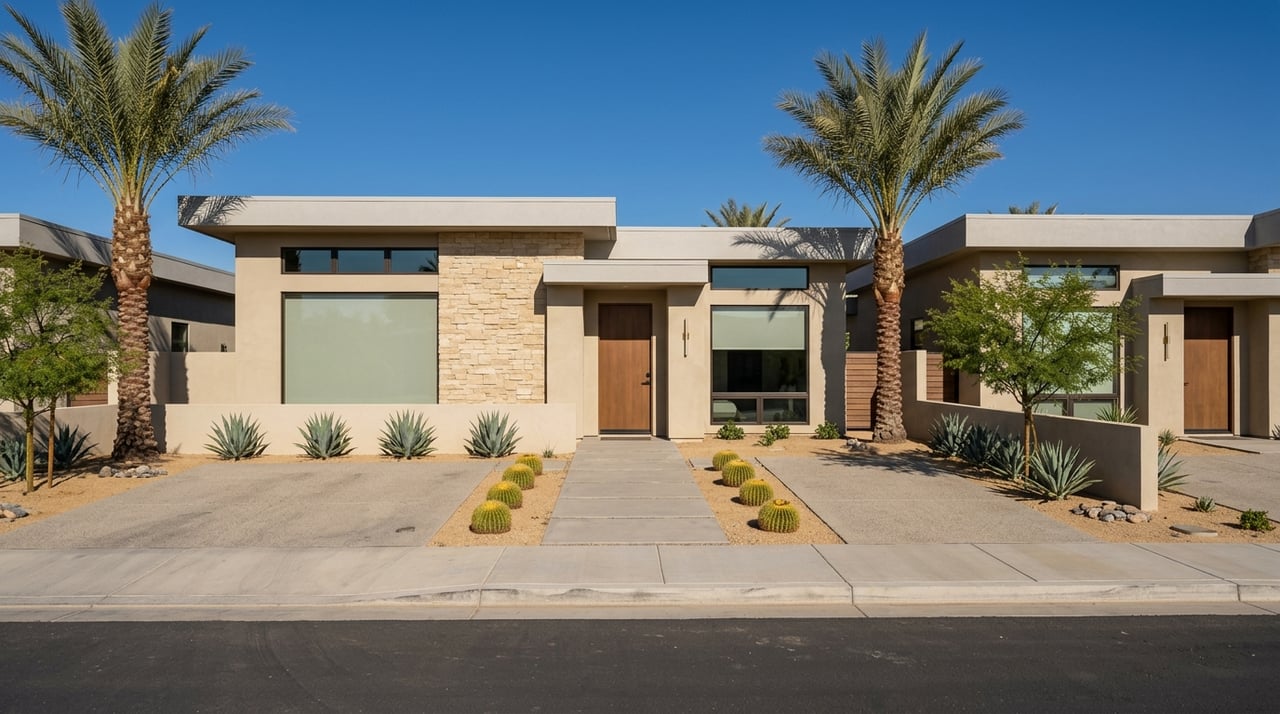
Choosing between a gated and open neighborhood in Palm Springs is not as simple as picking privacy over freedom. If you are buying a primary home, second home, or investment property here, the real difference often comes down to rules, upkeep, rental options, and the kind of day-to-day ownership experience you want. The good news is that Palm Springs offers strong neighborhood identity in both settings, and understanding how each one works can help you buy with more confidence. Let’s dive in.
Palm Springs Is More Nuanced
In Palm Springs, the choice is rarely just gated versus non-gated. The city has 52 recognized neighborhood organizations through ONE-PS, and the planning department states that it works to protect the city’s single-family character. That means many open-street neighborhoods still have a clear civic identity, community involvement, and city oversight.
Some open neighborhoods are also located within historic districts. According to the city, these districts carry historic, architectural, cultural, or aesthetic significance, and exterior changes may be reviewed by preservation staff or the Historic Site Preservation Board for larger projects. In other words, open does not automatically mean unregulated in Palm Springs.
What Gated Neighborhoods Usually Offer
Gated communities are typically built around restricted access and shared governance. In California, many of these neighborhoods are common-interest developments, or CIDs, with automatic membership in a homeowners association and rules set by CC&Rs, as explained by the California Department of Real Estate.
For many buyers, that structure brings a more managed ownership experience. The HOA documents often address common-area maintenance, insurance, assessments, and architectural standards, and the board may hire a professional manager while still remaining responsible for the association.
Shared Maintenance and Costs
One of the biggest practical differences is how upkeep is handled. Under California Civil Code Section 4775, the association is generally responsible for repairing and maintaining common areas, while owners are usually responsible for their separate interest unless the governing documents say otherwise.
That can be appealing if you want a neighborhood where shared spaces are maintained through a structured budget. At the same time, HOA ownership usually means monthly dues, and the DRE notes that assessments fund both operating expenses and reserves. Special assessments can also happen for major repairs or unexpected costs, although without member approval they are generally capped at 5% of gross budgeted expenses in a fiscal year.
Exterior Rules and Approval
Gated communities often have tighter control over visible property changes. If the CC&Rs require architectural approval, California Civil Code Section 4765 requires that the review process be fair, reasonable, and expeditious.
For you as a buyer, that usually means more predictability around curb appeal and neighborhood standards. It can also mean less flexibility if you want to make exterior updates quickly or personalize the home in ways that fall outside community guidelines.
What Open Neighborhoods Usually Mean
Open neighborhoods in Palm Springs generally rely more on public streets, city code enforcement, and neighborhood organizations than on a private gate or HOA board. The city provides a property-maintenance and homeowner resource process, and its planning department is organized to support residential neighborhoods and preserve their character.
That matters because open neighborhoods are not necessarily a free-for-all. City zoning, maintenance rules, and planning review still shape what owners can and cannot do.
More Flexibility, Still Some Oversight
If you value autonomy, open neighborhoods may feel more comfortable. In many cases, they give owners more room for individual expression than a gated HOA community.
Still, Palm Springs notes that homes on hillside lots or major thoroughfares can be subject to city architectural review. Historic districts can add another layer of oversight for exterior changes, which means you should always verify the property’s specific status before assuming you have full design freedom.
Gated vs Open: Key Differences
Here is a simple way to think about the trade-offs:
| Factor | Gated Neighborhoods | Open Neighborhoods |
|---|---|---|
| Access | Restricted or controlled access | Public street access |
| Governance | HOA, CC&Rs, board oversight | City rules, code enforcement, neighborhood groups |
| Common areas | Usually maintained by HOA | Typically public or individually maintained |
| Exterior changes | Often require HOA approval | May allow more flexibility, but city and historic rules can apply |
| Monthly costs | Often includes HOA dues | May not have HOA dues |
| Ownership feel | More structured and managed | More independent and varied |
Neither option is automatically better. The right fit depends on whether you want stronger private governance and managed standards, or more independence within city rules.
Rental and Investment Rules Matter
For many buyers in Palm Springs, the biggest dividing line is not the gate. It is rental eligibility.
The city’s vacation rental program applies to single-family dwellings and uses a permit system. As of the city’s November 2025 update, new permittees are limited to 26 contracts per year, existing permittees to 32, and permits are also subject to a 20% cap based on dwelling units within organized neighborhoods.
If the home is in an HOA community, the city also requires an HOA letter on official letterhead for vacation-rental or homeshare applications. That extra step can be significant for buyers who want income potential.
HOA Rules Can Be Stricter
State law adds another layer. Under California Civil Code Section 4741, a common-interest development cannot impose a blanket ban on rentals of separate interests, but it may limit rentals to less than 25% of units and may prohibit transient or short-term rentals of 30 days or less.
So a home in a gated community may seem attractive for investment, but the CC&Rs could still make short-term rental plans unworkable. Even in open neighborhoods, city permit caps and neighborhood-based limits can affect whether a property qualifies.
Verify City and Community Rules
This is where buyers can get tripped up. A property can look ideal on paper, but your actual use depends on both city rules and any community restrictions.
That is also true across the broader Coachella Valley. Greater Palm Springs communities have different regulations, and nearby cities such as La Quinta handle short-term rental permits differently. If rental use matters to you, verify every layer before you write an offer.
Resale Appeal Depends on Buyer Priorities
Many buyers ask whether gated or open neighborhoods hold value better. The honest answer is that resale appeal often depends on what future buyers value most.
Palm Springs states that protected historic districts help stabilize property values, and studies show values in protected districts tend to be higher than comparable neighborhoods without those standards or protections. On the gated side, the DRE explains that HOAs are designed to preserve, enhance, and protect the value of the development, although that benefit comes with assessments and the possibility of special assessments.
Predictability Versus Character
A gated neighborhood may appeal to buyers who want a more predictable environment, shared maintenance, and defined architectural standards. An open neighborhood may attract buyers who value street openness, neighborhood character, and more flexibility.
In Palm Springs, both can be appealing for different reasons. The better question is not which one is universally superior, but which one best fits your lifestyle, ownership style, and long-term goals.
Questions to Ask Before You Buy
Before choosing between a gated or open neighborhood in Palm Springs, ask yourself:
- Do you want an HOA to handle common-area upkeep, reserve planning, and architectural rules?
- Would you rather have more autonomy, even if that means relying more on city processes and your own property management?
- If you plan to rent the home, does it qualify under both Palm Springs regulations and any HOA CC&Rs?
- Are monthly dues comfortable for your budget, and could a special assessment affect your plans?
- Are you buying mainly for personal use, income potential, or a mix of both?
- Do you care more about uniform standards and private access, or flexibility and an open streetscape?
Your answers will usually point you toward the right match faster than any broad label.
How to Choose the Right Fit
If you want a more managed environment with shared maintenance responsibilities and clearly enforced exterior standards, a gated neighborhood may feel like the better fit. If you prefer more independence and appreciate the established character of Palm Springs open-street areas, an open neighborhood may align better with how you want to live.
The key is to evaluate the specific property, neighborhood, and governing rules rather than relying on assumptions. In Palm Springs, an open neighborhood may still have meaningful oversight, and a gated community may still have limitations that affect your plans.
If you want help comparing neighborhoods, reviewing HOA realities, or narrowing down which Palm Springs setting fits your goals, Kurt Bayek offers local, concierge-level guidance designed to make your next move clearer and more confident.
FAQs
What is the main difference between gated and open neighborhoods in Palm Springs?
- Gated neighborhoods usually have restricted access and HOA governance, while open neighborhoods rely more on public street access, city code enforcement, planning rules, and neighborhood organizations.
Do open neighborhoods in Palm Springs have any rules?
- Yes. Open neighborhoods can still be affected by city zoning, property-maintenance rules, architectural review on some lots, and historic district preservation standards.
Do gated communities in Palm Springs always have HOAs?
- Many gated communities are common-interest developments governed by an HOA, with CC&Rs that typically address maintenance, assessments, insurance, and architectural control.
Can you use a gated Palm Springs home as a vacation rental?
- Possibly, but you need to confirm both Palm Springs permit rules and the HOA’s CC&Rs, since community rules may be stricter than state law allows for rentals.
Are open neighborhoods better for buyers who want more flexibility?
- In many cases, yes. Open neighborhoods often allow more individual expression than HOA-governed communities, although city and historic review rules may still apply.
Which neighborhood type is better for resale in Palm Springs?
- There is no universal winner. Resale appeal often depends on whether future buyers prefer managed standards and predictability or flexibility and neighborhood character.