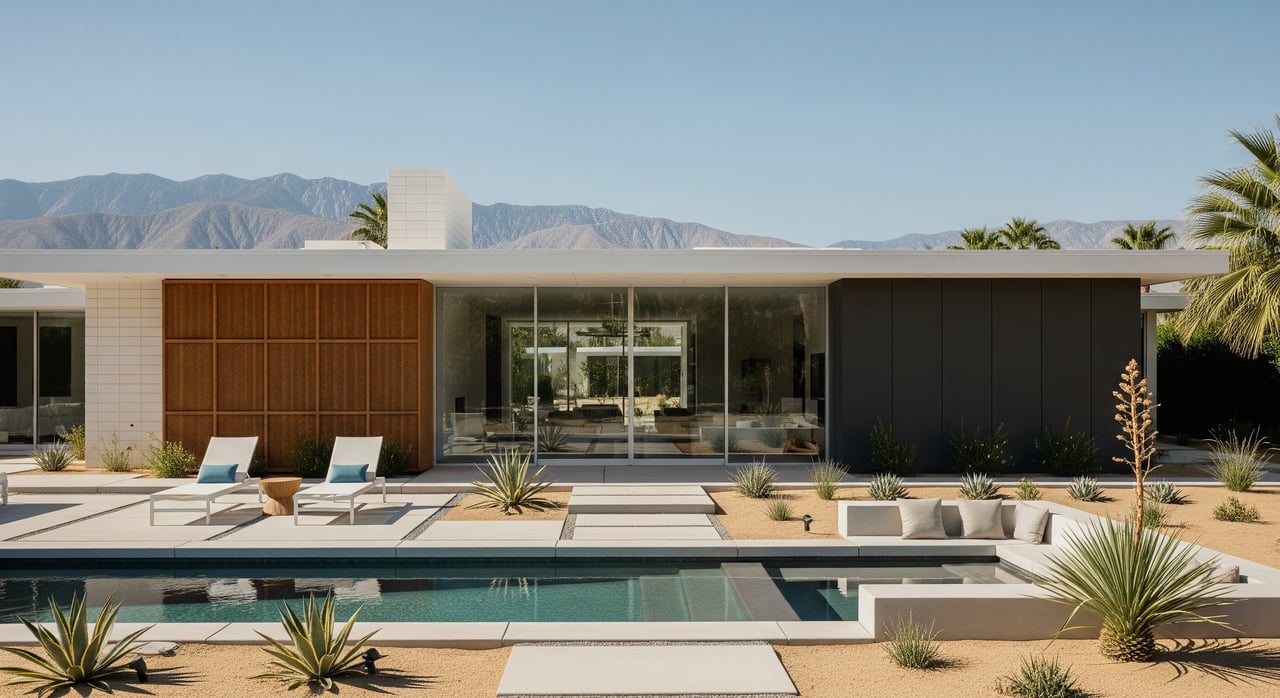
Torn between a classic mid-century gem and a sleek contemporary build in Palm Springs? You are not alone. Both styles celebrate sun, views, and poolside living, but they deliver very different day-to-day experiences and maintenance needs. In this guide, you will learn what to look for, where to find each style, and how to plan for desert ownership so you can choose with confidence. Let’s dive in.
Mid-century vs contemporary at a glance
- Design intent
- Mid-century modern: Simple, low-profile forms that blur indoors and outdoors. Usually single level and human scale.
- Contemporary: Larger footprints and bolder massing that use current technology and finishes.
- Rooflines and structure
- Mid-century modern: Flat or low-pitched roofs, post-and-beam frames, carports are common.
- Contemporary: Varied rooflines, engineered spans, and integrated or oversized garages.
- Windows and facades
- Mid-century modern: Clerestories, sliders, and long glass walls with breeze block privacy screens.
- Contemporary: Larger uninterrupted glazing with high-performance glass and mixed materials.
- Interiors and flow
- Mid-century modern: Open living zones, efficient kitchens, and strong patio connection.
- Contemporary: Great rooms, larger open kitchens, and flexible spaces for entertaining and work.
Design and architecture
Rooflines and structure
Mid-century homes tend to sit low and long. Flat or low-shed roofs, wide overhangs, and post-and-beam construction create open interiors without heavy walls. You will often see carports instead of enclosed garages.
Contemporary homes push form and engineering further. Expect flat planes, mono-slopes, folded roofs, or dramatic cantilevers. Many use steel and concrete for longer spans, and garages are typically enclosed and larger.
Walls and windows
A hallmark of Palm Springs mid-century design is glass. Floor-to-ceiling walls, clerestory bands, and sliding doors point to patios, pools, and mountain backdrops. These planes of glass often pair with concrete block, stucco, or wood, and you may spot breeze blocks that filter light and protect privacy.
Contemporary builds amplify those moves with bigger, cleaner expanses of glazing. You will see modern assemblies such as dual panes, low-E coatings, and insulated frames. Facades mix stucco, metal panels, board-formed concrete, composite woods, and glass to add contrast and texture.
Materials and finishes
Mid-century interiors embrace honest materials. Look for exposed beams, terrazzo, natural wood cabinetry, and stone accents. Many kitchens read simple by today’s standards, with built-in storage and efficient work zones.
Contemporary homes offer a broader palette. Polished concrete or engineered floors, quartz counters, metal and glass details, and composite siding are common. Renovated mid-century properties often retain structure and proportions while upgrading to modern appliances and finishes.
Interior layout and flow
Mid-century plans favor open living areas that extend outdoors, with an emphasis on sitelines to the yard and pool. Kitchens are smaller but highly functional, and the scale feels intimate and livable.
Contemporary layouts keep the openness but scale it up. You will find grand great rooms, large islands, and dedicated zones for entertaining, wellness, and work. Technology integration is easier in newer construction, which appeals if you want smart-home features.
Landscape and outdoor living
Classic desert landscaping fits both styles. Mid-century yards highlight the pool, simple hardscape, and drought-tolerant plantings like palms, agaves, cactus, and grasses. The goal is privacy, shadow play, and unobstructed views.
Contemporary outdoor spaces often layer in more amenities. Expect shaded pergolas, outdoor kitchens, integrated lighting, and water features. Xeriscaping and low-water designs are common for sustainability and lower upkeep.
Neighborhoods to explore
Mid-century hubs
If you want the signature Palm Springs mid-century experience, start where the concentration is strongest. Twin Palms showcases William Krisel’s tract designs and is tied to notable celebrity history. Movie Colony East and West feature architect-designed homes from the era and a rich local story. Vista Las Palmas is home to many high-profile residences. You will also find excellent mid-century stock in Racquet Club Estates, Deepwell Estates, and Warm Sands.
The city’s identity includes iconic properties like the Kaufmann Desert House by Richard Neutra and Frank Sinatra’s former Twin Palms residence. You can tour neighborhoods where original homes sit beside sensitive renovations and modern rebuilds, which helps you see differences side by side.
Where contemporary shines
Contemporary homes appear across central Palm Springs on infill lots, where older homes have been replaced or expanded. You will also see custom builds on the north and east hillsides, taking advantage of elevated views. Newer gated or master-planned communities along the edges of the city often favor contemporary styling and larger footprints. Many renovated properties inside classic mid-century neighborhoods blend original character with new systems and finishes.
Zoning, lot size, and historic designation affect what can be altered or replaced. If you plan major changes, it is smart to understand local permitting and any preservation review before you buy.
Desert maintenance realities
Roofs and exteriors
Flat and low-slope roofs look clean but require attention. Plan for yearly roof inspections and check after significant storms. Stucco is common and can develop hairline cracks from temperature swings. Patch and paint with UV-resistant products to keep moisture and pests out. Sun exposure is intense in the valley, so exterior surfaces and wood elements need more frequent refinishing.
Glass and shading
Large glass walls are beautiful, but they can raise cooling loads and glare. If a home still has older single panes, upgrading to high-performance glazing is one of the most effective retrofits. Exterior shading, deeper overhangs, and well-placed pergolas reduce heat gain better than interior shades alone. Operable clerestories and cross-ventilation design help when evening temperatures drop.
HVAC and energy
Cooling is the main energy cost in Palm Springs. Well-sized and maintained air-conditioning systems are essential. Sealed ducts and added insulation where feasible improve comfort and reduce bills, especially in older mid-century homes. Contemporary upgrades often include high-efficiency split systems, variable-speed compressors, and smart thermostats. Solar is widely adopted in the desert. If the home is a designated historic resource, check placement and any review requirements before installation.
Pools and water use
Pools are central to the Palm Springs lifestyle. Routine chemistry, equipment checks, and seasonal adjustments are part of ownership. Consider efficiency measures like variable-speed pumps, pool covers, and modern filtration to reduce electricity and water loss. In the landscape, drip irrigation, smart controllers, and drought-tolerant plant palettes are the norm. Regular maintenance prevents both waste and plant stress.
Materials and pests
Metal fixtures and hardware wear faster in the sun and around pool chemicals. Stainless fasteners and corrosion-resistant finishes hold up better. Terrazzo and original tile can be restored by specialists. Termites are still a consideration in the desert, so periodic inspections matter, especially in older homes with exposed wood. Keep gaps sealed to deter rodents and wildlife.
Preservation, renovation, and permits
If you are buying an older mid-century home, many upgrades can preserve the look while improving comfort. Start with the building envelope and HVAC, then move to interior finishes. If the property is designated or located in a review area, confirm rules before altering windows, roofs, or street-facing elements. Contractors familiar with post-and-beam details, breeze block repair, and historically sympathetic window replacements can protect value and character.
Which style fits you
Choose mid-century modern if you love:
- Low, horizontal profiles and iconic post-and-beam lines
- Authentic details like clerestories, terrazzo, or breeze block
- Human-scale rooms that open to a private patio and pool
- The idea of targeted upgrades that keep the original character
Choose contemporary if you want:
- Larger, sculptural massing and dramatic glazing
- Great rooms and open kitchens designed for entertaining
- Newer systems, smart-home features, and lower ongoing maintenance
- Materials and finishes that reflect current design trends
Tour like a local
- Plan a side-by-side tour. Visit a classic mid-century neighborhood like Twin Palms or Movie Colony, then see contemporary infill or a hillside custom home for contrast.
- Study light and shade. Note how roof overhangs, clerestories, and pergolas manage sun and glare at different times of day.
- Ask the right questions. Confirm roof age, glazing type, HVAC efficiency, and pool equipment. If you plan changes, check whether historic review applies.
- Budget for upgrades. Prioritize envelope and HVAC, then windows and shading, then cosmetic finishes. Get multiple bids to compare scope and timelines.
- Explore local culture. Modernism Week and the Palm Springs Art Museum’s Architecture & Design Center can deepen your understanding of the city’s design legacy.
Next steps
Finding the right Palm Springs home is about matching lifestyle with architecture and maintenance realities. Whether you lean mid-century or contemporary, a clear plan for inspections, energy efficiency, and outdoor living will set you up for success.
If you would like a curated tour that compares neighborhoods, floor plans, and ownership costs side by side, reach out to Kurt Bayek. You will get concierge-level guidance, vetted local vendors, and a step-by-step process so you can move forward with confidence.
FAQs
What defines a Palm Springs mid-century modern home?
- Low, horizontal profiles with post-and-beam construction, clerestory windows, floor-to-ceiling glass, and indoor to outdoor flow, often with breeze block details and a pool-centric yard.
How do contemporary Palm Springs homes differ in maintenance?
- Newer systems, high-performance glazing, and modern materials can lower ongoing maintenance, but large glass and flat roofs still require routine inspections and shading strategies.
Which Palm Springs neighborhoods have the most mid-century homes?
- Twin Palms, Movie Colony East and West, Vista Las Palmas, Racquet Club Estates, Deepwell Estates, and Warm Sands have notable concentrations, with originals alongside renovations.
Can I install solar on a historic mid-century home in Palm Springs?
- Often yes, but placement and visibility can be subject to review if the property is designated or within a review area, so confirm local guidelines before installation.
How much does it cost to upgrade windows or HVAC in an older mid-century home?
- Costs vary by home and scope; prioritize envelope and HVAC first, and get multiple bids to understand options, timelines, and energy savings.
Are pools standard in Palm Springs homes and what upkeep is typical?
- Many homes feature pools; expect regular chemistry checks, equipment maintenance, and seasonal adjustments, with efficiency gains from variable-speed pumps and covers.